
Do you even want to stop doomscrolling?
The silent addiction rewiring your brain
You’re scrolling, swiping, switching tabs - jumping from task to task. Doing everything, but nothing sticks. Overstimulated, underwhelmed, and just a little foggy. You’re not alone. In a world where attention is the most valuable currency, everyone’s fighting for yours.
What we've noticed

@abc on TikTok
We’re living through a full-blown attention crisis. The sheer volume of content; news, trends, hot takes, has created a constant hum of cognitive noise. Screen time has been rising steadily over the past two decades, but it surged during the pandemic and hasn’t slowed down. Algorithm-driven feeds accelerated our slide into dopamine addiction - so gradually, we barely noticed. Until suddenly, it wasn’t subtle anymore. Now, we’re feeling the toll. Writer Yana Yuhai calls it the quiet unraveling of focus, a state we’ve come to know as brain fog, dopamine burnout, or decision fatigue. And it’s not just a vibe shift - the numbers back it up. Six in ten Mamamia women say they feel more overwhelmed this year than ever before. Among Gen Z and Y women, nearly half (45% and 41%) admit they’re spending too much time online, and not enough connecting in real life.
Pinterest reflects this shift, with searches for ‘digital detox ideas’ and ‘vision boards’ up 72% and 273%.
Making sense of it
Content wasn’t always like this. Today, it’s engineered to keep us hooked - from algorithmic feeds to children’s TV - our brains are being overstimulated and our attention spans are steadily shrinking. Dr Gloria Mark found that in 2004, adults stayed on a screen for 2.5 minutes before switching. By 2021, it was just 47 seconds. In response to this overload, McKinsey introduced “the attention equation.” It reframes the challenge brands face today, that attention is no longer just a matter of grabbing eyeballs - it’s about earning focus in a world where consumers are overloaded, distracted, and actively seeking mental relief. Content now competes not just with other brands and platforms, but with a person’s own desire to protect their time, headspace, and emotional energy. Here’s the shift: women aren’t checking out - they’re choosing better.
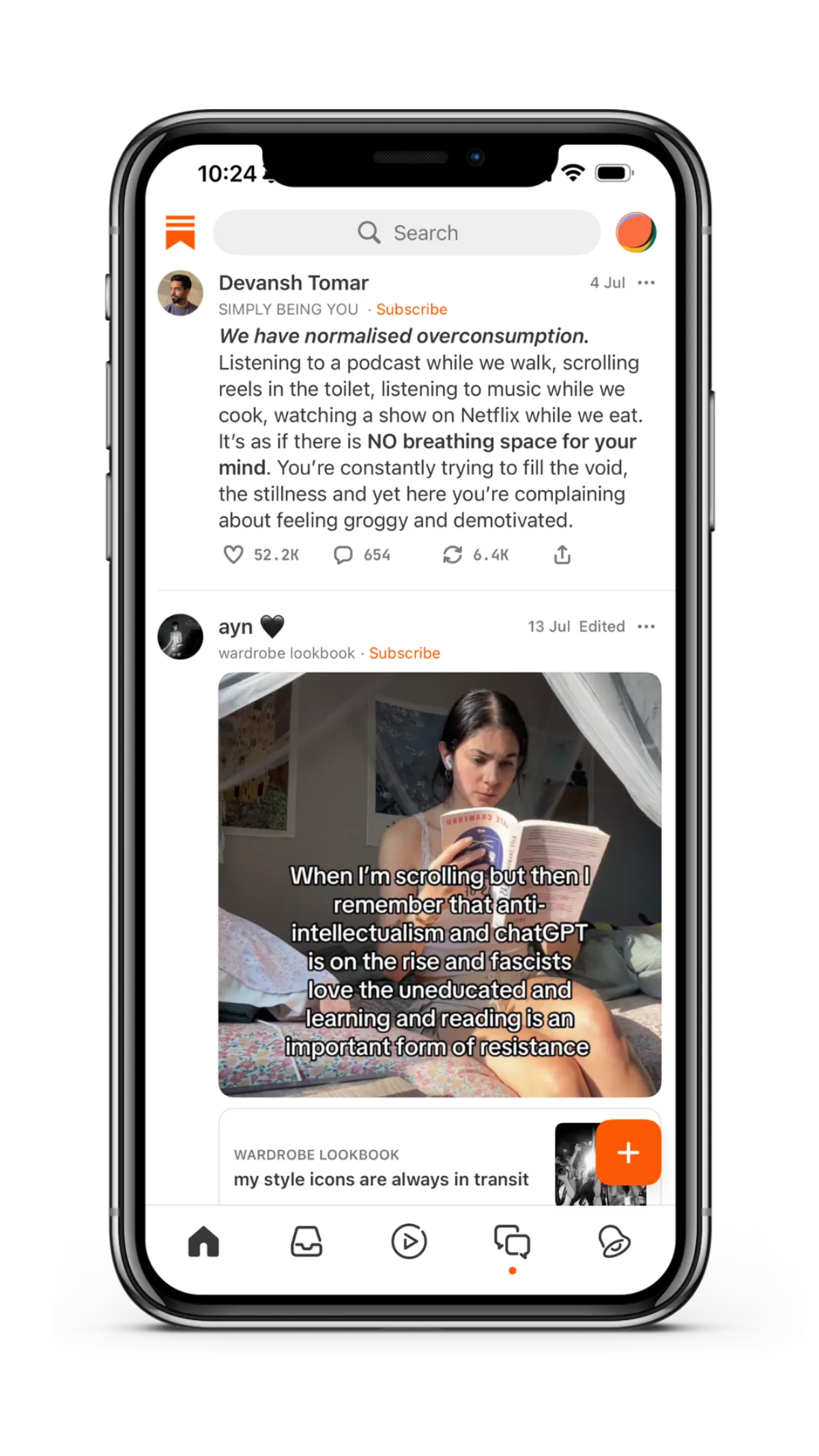
'Slow Content' platform Substack is surging in popularity.
In a content landscape that’s always on, they’re becoming more selective about what earns their attention. They’re trading mindless scrolls for content that gives something back: clarity, calm, connection. That’s why slower, more purposeful formats are rising, from long-form reads to newsletters and mindful video. Podcasts, in particular, have become a haven: 79% of the Mamamia audience listen to them, and 65% say they’re their go-to way to unwind - second only to getting outside in nature.
What it means for brands
She’s not switching off - she’s switching gears. Still online, still engaged, but with a sharper filter. She’s curating her feed - letting in what feels nourishing, and leaving the rest. What she’s looking for now isn’t just mindless entertainment, but content that provides a reprieve, a reset, or a reconnection. That’s why she’s turning to Mamamia. Every piece of content we create is thoughtfully crafted through the lens of help, heart, or humour. Whether it’s a podcast that feels like a conversation with friends, a piece that speaks to her experience, or a video that makes her laugh - it earns her attention because it reflects her world. We’ve also spotted a surge in newsletter engagement as a form of intentional media consumption. In a world of endless scrolling, newsletters offer a moment of pause. It’s content people choose to receive, intentionally open, and read when it matters most. At Mamamia, our newsletters reach over 400,000 subscribers, with an open rate of 51% (compared to the 30% industry average), spanning eight categories from entertainment and pop culture to beauty and business. For our audience, depth is the new dopamine. She’s not looking for more - she’s looking for better. And for brands, the message is clear: don’t try to shout louder, show up in the spaces where she’s consciously choosing to be.
More from Inside Mamamia
See everything →After three years in the UK leading partnerships at Pinterest, Snap and TikTok, Danielle Rigg-Smith returns to Australia to lead Mamamia's NSW partnerships.
Audience and download growth across Mamamia's house of brands have seen Australia's largest women's network embed its position as Australia's most popular independent publisher, according to the independent Triton Digital Podcast Ranker for August.
Former Vogue Australia Digital Director Alison Izzo joins Mamamia to lead You Beauty, Australia's biggest beauty podcast.